science-junkie:

itsrosewho:

FAMOUS AUTHORS

  • Classic Bookshelf: This site has put classic novels online, from Charles Dickens to Charlotte Bronte.
  • The Online Books Page: The University of Pennsylvania hosts this book search and database.
  • Project Gutenberg: This famous site has over 27,000 free books online.
  • Page by Page Books: Find books by Sir Arthur Conan Doyle and H.G. Wells, as well as speeches from George W. Bush on this site.
  • Classic Book Library: Genres here include historical fiction, history, science fiction, mystery, romance and children’s literature, but they’re all classics.
  • Classic Reader: Here you can read Shakespeare, young adult fiction and more.
  • Read Print: From George Orwell to Alexandre Dumas to George Eliot to Charles Darwin, this online library is stocked with the best classics.
  • Planet eBook: Download free classic literature titles here, from Dostoevsky to D.H. Lawrence to Joseph Conrad.
  • The Spectator Project: Montclair State University’s project features full-text, online versions of The Spectator and The Tatler.
  • Bibliomania: This site has more than 2,000 classic texts, plus study guides and reference books.
  • Online Library of Literature: Find full and unabridged texts of classic literature, including the Bronte sisters, Mark Twain and more.
  • Bartleby: Bartleby has much more than just the classics, but its collection of anthologies and other important novels made it famous.
  • Fiction.us: Fiction.us has a huge selection of novels, including works by Lewis Carroll, Willa Cather, Sherwood Anderson, Flaubert, George Eliot, F. Scott Fitzgerald and others.
  • Free Classic Literature: Find British authors like Shakespeare and Sir Arthur Conan Doyle, plus other authors like Jules Verne, Mark Twain, and more.

TEXTBOOKS

MATH AND SCIENCE

CHILDREN’S BOOKS

  • byGosh: Find free illustrated children’s books and stories here.
  • Munseys: Munseys has nearly 2,000 children’s titles, plus books about religion, biographies and more.
  • International Children’s Digital Library: Find award-winning books and search by categories like age group, make believe books, true books or picture books.
  • Lookybook: Access children’s picture books here.

PHILOSOPHY AND RELIGION

PLAYS

  • ReadBookOnline.net: Here you can read plays by Chekhov, Thomas Hardy, Ben Jonson, Shakespeare, Edgar Allan Poe and others.
  • Plays: Read Pygmalion, Uncle Vanya or The Playboy of the Western World here.
  • The Complete Works of William Shakespeare: MIT has made available all of Shakespeare’s comedies, tragedies, and histories.
  • Plays Online: This site catalogs “all the plays [they] know about that are available in full text versions online for free.”
  • ProPlay: This site has children’s plays, comedies, dramas and musicals.

MODERN FICTION, FANTASY AND ROMANCE

FOREIGN LANGUAGE

HISTORY AND CULTURE

  • LibriVox: LibriVox has a good selection of historical fiction.
  • The Perseus Project: Tufts’ Perseus Digital Library features titles from Ancient Rome and Greece, published in English and original languages.
  • Access Genealogy: Find literature about Native American history, the Scotch-Irish immigration in the 19th and 20th centuries, and more.
  • Free History Books: This collection features U.S. history books, including works by Paul Jennings, Sarah Morgan Dawson, Josiah Quincy and others.
  • Most Popular History Books: Free titles include Seven Days and Seven Nights by Alexander Szegedy and Autobiography of a Female Slave by Martha G. Browne.

RARE BOOKS

  • Questia: Questia has 5,000 books available for free, including rare books and classics.

ARTS AND ENTERTAINMENT

  • Books-On-Line: This large collection includes movie scripts, newer works, cookbooks and more.
  • Chest of Books: This site has a wide range of free books, including gardening and cooking books, home improvement books, craft and hobby books, art books and more.
  • Free e-Books: Find titles related to beauty and fashion, games, health, drama and more.
  • 2020ok: Categories here include art, graphic design, performing arts, ethnic and national, careers, business and a lot more.
  • Free Art Books: Find artist books and art books in PDF format here.
  • Free Web design books: OnlineComputerBooks.com directs you to free web design books.
  • Free Music Books: Find sheet music, lyrics and books about music here.
  • Free Fashion Books: Costume and fashion books are linked to the Google Books page.

MYSTERY

  • MysteryNet: Read free short mystery stories on this site.
  • TopMystery.com: Read books by Edgar Allan Poe, Sir Arthur Conan Doyle, GK Chesterton and other mystery writers here.
  • Mystery Books: Read books by Sue Grafton and others.

POETRY

  • The Literature Network: This site features forums, a copy of The King James Bible, and over 3,000 short stories and poems.
  • Poetry: This list includes “The Raven,” “O Captain! My Captain!” and “The Ballad of Bonnie and Clyde.”
  • Poem Hunter: Find free poems, lyrics and quotations on this site.
  • Famous Poetry Online: Read limericks, love poetry, and poems by Robert Browning, Emily Dickinson, John Donne, Lord Byron and others.
  • Google Poetry: Google Books has a large selection of poetry, fromThe Canterbury Tales to Beowulf to Walt Whitman.
  • QuotesandPoem.com: Read poems by Maya Angelou, William Blake, Sylvia Plath and more.
  • CompleteClassics.com: Rudyard Kipling, Allen Ginsberg and Alfred Lord Tennyson are all featured here.
  • PinkPoem.com: On this site, you can download free poetry ebooks.

MISC

  • Banned Books: Here you can follow links of banned books to their full text online.
  • World eBook Library: This monstrous collection includes classics, encyclopedias, children’s books and a lot more.
  • DailyLit: DailyLit has everything from Moby Dick to the recent phenomenon, Skinny Bitch.
  • A Celebration of Women Writers: The University of Pennsylvania’s page for women writers includes Newbery winners.
  • Free Online Novels: These novels are fully online and range from romance to religious fiction to historical fiction.
  • ManyBooks.net: Download mysteries and other books for your iPhone or eBook reader here.
  • Authorama: Books here are pulled from Google Books and more. You’ll find history books, novels and more.
  • Prize-winning books online: Use this directory to connect to full-text copies of Newbery winners, Nobel Prize winners and Pulitzer winners.

… and here is a gift for all of us.

Dialogue Puntuation

wordsnstuff:

image

– Here’s a quick guide to punctuating dialogue in your story, since quite a few of you have expressed confusion surrounding the subject. A question about this subject was asked by @sakurahiwatari and I decided to make it into its very own post. Happy grammar-ing!


New Speaker ~ When there is someone new speaking, start a new paragraph. Always.

Multiple Paragraphs Of Dialogue From One Speaker ~ Sometimes there are multiple paragraphs of dialogue without a pause from a single speaker, so to punctuate these paragraphs, end each one with a terminal mark before continuing onto the next. Start the next paragraph of continuing dialogue with a new quotation mark, but don’t add one to the end of the last to let the reader know the speaker isn’t finished, or they’ll assume it’s somebody else and get confused.

Paragraph With Multiple Lines Of Dialogue ~ Insert your dialogue tag of choice or description of action following the first sentence, then continue with what the current speaker is saying. There are exceptions, but this helps the reader keep track of who is saying what.

Names In Dialogue ~ If there is a name in a piece of dialogue, or a nickname for that matter, enclose it with punctuation. If it is at the beginning or end of a sentence, put a comma between it and the rest of the line. If it is in the middle, put a comma before and after it.

Elipses ~ Use this when a character trails off. Don’t overuse this though. It truly shouldn’t show up very often and get’s quite distracting to the reader’s own narration when it keeps popping up.

When The Speaker Is Interrupted ~ Use an em dash where the speaker is interrupted, then where they continue their line.

When The Speaker Is Cut Off ~ Use an em dash, then close the quotation. This is mostly used when the speaker is cut off right in the middle of a word, such as “help m—” or “enou—”.

Quote Inside Dialogue ~ When a speaker is quoting someone or something else, the part they’re quoting should be enclosed in single quotation marks (”He is weak. ’Stop it son, stop it!’ Right, not doing that.”). When the single quotation marks end or begin next to the double quotation marks, put a space between them.

Dialogue Stopped By Action Or Thought Instead Of Dialogue Tag ~ When dialogue is interrupted to describe what a character is doing or narrate what a character is thinking, you pause the dialogue without a terminal mark, enclose the action or thought between two em dashes, then continue. For instance: “You wanted a ring”—she played with the little loop on her finger—”but you never cared enough to ask for one.” This rule applies to narration interrupted by action or thought as well.

Questions In Dialogue With A Dialogue Tag ~ The question mark is enclosed in the quotation, the dialogue tag is not capitalized because it is part of the same sentence.

Dialogue Interrupted By Dialogue Tag ~ Commas go at the end of the first quotation and at the end of the dialogue tag. This applies to splitting the dialogue into two sentences, but the dialogue tag would end with a period and the second sentence would begin with a capital letter.

One Line With A Dialogue Tag And Action ~ Dialogue is within quotation, tag follows and is separated from the action by a comma. This is also the case when the action and dialogue tag come before the dialogue, but the dialogue tag is always between the action and dialogue.

When A Dialogue Tag Is Before The Dialogue ~ A comma is put outside the quotation, between it and the tag.

Dialogue Tag After Dialogue ~ Line ends with a comma, then quotation mark, then dialogue tag, uncapitalized. This is because it is all one sentence.

Single Line Of Dialogue, No Tag Or Action ~ Line ended with terminal mark inside of quotations.

Direct & Indirect Dialogue ~ Direct dialogue is when someone is speaking, indirect dialogue is when someone is described as saying something. Indirect dialogue doesn’t require quotation marks, and an example would be: She told him that she was sorry.


If you want to learn more and get more detail about punctuation in dialogue, here is a helpful article where I got a lot of my information.


Support Wordsnstuff!

240 Words to Describe Someone’s Tone/Voice

smut-101:

  1. Abrasive – showing little concern for the feelings of others; harsh
  2. Absurd – wildly unreasonable, illogical, or inappropriate
  3. Accusatory – suggesting someone has done something wrong, complaining
  4. Acerbic – sharp and forthright
  5. Acidic – harsh or critical
  6. Admiring – approving; think highly of; respectful; praising
  7. Aggressive – hostile; determined; forceful; argumentative
  8. Aggrieved –  angry and sad because you think you have been unfairly treated
  9. Airy –  giving an impression of being unconcerned or not serious
  10. Ambivalent – having mixed feelings; uncertain; in a dilemma; undecided
  11. Amused – pleasantly; entertain or divert in an enjoyable or cheerful manner
  12. Angry – incensed or enraged; threatening or menacing
  13. Animated – full of life or excitement; lively; spirited; impassioned; vibrant
  14. Anxious –  typically with a feeling of unease
  15. Apathetic – showing little interest; lacking concern; indifferent; unemotional
  16. Apologetic – full of regret; repentant; remorseful; acknowledging failure
  17. Appreciative – grateful; thankful; showing pleasure; enthusiastic
  18. Ardent – enthusiastic; passionate
  19. Arrogant – pompous; disdainful; overbearing; condescending; vain; scoffing
  20. Assertive – self-confident; strong-willed; authoritative; insistent
  21. Authoritative – commanding and self-confident
  22. Awestruck – amazed, filled with wonder/awe; reverential
  23. Barbed – deliberately hurtful
  24. Barking – utter a command or question abruptly or aggressively
  25. Belligerent – hostile; aggressive; combatant
  26. Benevolent – sympathetic; tolerant; generous; caring; well meaning
  27. Bitter – angry; acrimonious; antagonistic; spiteful; nasty
  28. Blasé – unimpressed or indifferent to something because one has experienced or seen it so often before
  29. Bleak – without hope or encouragement; depressing; dreary
  30. Bombastic – high-sounding but with little meaning; inflated
  31. Booming – loud, deep, and resonant
  32. Bored – to tire or make weary by being dull, repetitious, or uninteresting
  33. Brash – self-assertive in a rude, noisy, or overbearing way
  34. Braying – speak or laugh loudly and harshly
  35. Breathy – producing or causing an audible sound of breathing, often related to physical exertion or strong feelings
  36. Breezy – appearing relaxed, informal, and cheerily brisk
  37. Brittle – lacking warmth, sensitivity, or compassion; aloof
  38. Bubbly – full of cheerful high spirits
  39. Burbling – speak in an unintelligible or silly way, typically at unnecessary length
  40. Callous – cruel disregard; unfeeling; uncaring; indifferent; ruthless
  41. Candid – truthful, straightforward; honest; unreserved
  42. Caustic – making biting, corrosive comments; critical
  43. Cautionary – gives warning; raises awareness; reminding
  44. Celebratory – praising; pay tribute to; glorify; honour
  45. Chatty – informal; lively; conversational; familiar
  46. Cheery – happy and optimistic
  47. Childish – silly and immature
  48. Chirping – say something in a lively and cheerful way
  49. Clipped – speech that is fast, that uses short sounds and few words, and that is often unfriendly or rude
  50. Cloying – disgust or sicken (someone) with an excess of sweetness, richness, or sentiment
  51. Coarse – rude, crude, or vulgar
  52. Colloquial – familiar; everyday language; informal; colloquial; casual
  53. Comic – humorous; witty; entertaining; diverting
  54. Compassionate – sympathetic; empathetic; warm-hearted; tolerant; kind
  55. Complex – having many varying characteristics; complicated
  56. Compliant – agree or obey rules; acquiescent; flexible; submissive
  57. Concerned – worried; anxious; apprehensive
  58. Conciliatory – intended to placate or pacify; appeasing
  59. Condescending – stooping to the level of one’s inferiors; patronising
  60. Confused – unable to think clearly; bewildered; vague
  61. Contemptuous – showing contempt; scornful; insolent; mocking
  62. Crisp – briskly decisive and matter-of-fact, without hesitation or unnecessary detail
  63. Critical – finding fault; disapproving; scathing; criticizing
  64. Croaking – a characteristic deep hoarse sound
  65. Cruel – causing pain and suffering; unkind; spiteful; severe
  66. Curious – wanting to find out more; inquisitive; questioning
  67. Curt – rudely brief
  68. Cynical – scornful of motives/virtues of others; mocking; sneering
  69. Defensive – defending a position; shielding; guarding; watchful
  70. Defiant – obstinate; argumentative; defiant; contentious
  71. Demeaning – disrespectful; undignified
  72. Depressing – sad, melancholic; discouraging; pessimistic
  73. Derisive – snide; sarcastic; mocking; dismissive; scornful
  74. Detached – aloof; objective; unfeeling; distant
  75. Dignified – serious; respectful; formal; proper
  76. Diplomatic – tactful; subtle; sensitive; thoughtful
  77. Disapproving – displeased; critical; condemnatory
  78. Disheartening – discouraging; demoralising; undermining; depressing
  79. Disparaging – dismissive; critical; scornful
  80. Direct – straightforward; honest
  81. Disappointed – discouraged; unhappy because something has gone wrong
  82. Discordant – harsh and jarring because of a lack of harmony
  83. Dispassionate – impartial; indifferent; unsentimental; cold; unsympathetic
  84. Dispirited – having lost enthusiasm and hope; disheartened
  85. Distressing – heart-breaking; sad; troubling
  86. Docile – compliant; submissive; deferential; accommodating
  87. Drawling – speak in a slow, lazy way with prolonged vowel sounds
  88. Dulcet – sweet and soothing
  89. Dull – lacking interest or excitement
  90. Earnest – showing deep sincerity or feeling; serious
  91. Egotistical – self-absorbed; selfish; conceited; boastful
  92. Empathetic – understanding; kind; sensitive
  93. Encouraging – optimistic; supportive
  94. Enthusiastic – excited; energetic
  95. Evasive – ambiguous; cryptic; unclear
  96. Excited – emotionally aroused; stirred
  97. Facetious – inappropriate; flippant
  98. Farcical – ludicrous; absurd; mocking; humorous and highly improbable
  99. Feathery – extremely light and soft or delicate
  100. Flippant – superficial; glib; shallow; thoughtless; frivolous
  101. Forceful – powerful; energetic; confident; assertive
  102. Formal – respectful; stilted; factual; following accepted styles/rules
  103. Frank – honest; direct; plain; matter-of-fact
  104. Fretful – expressing distress or irritation
  105. Frustrated – annoyed; discouraged
  106. Gentle – kind; considerate; mild; soft
  107. Ghoulish – delighting in the revolting or the loathsome
  108. Glum – dejected; morose
  109. Goofy – foolish; harmlessly eccentric
  110. Grating – harsh and unpleasant
  111. Gravelly – deep and rough-sounding
  112. Grim – serious; gloomy; depressing; lacking humour;macabre
  113. Growling – low grating voice, typically in a threatening manner
  114. Gruff – rough and low in pitch
  115. Gullible – naive; innocent; ignorant
  116. Guttural – produced in the throat; harsh-sounding
  117. Hard – unfeeling; hard-hearted; unyielding
  118. Harsh – cruel or severe
  119. Hearty – loudly vigorous and cheerful
  120. Hoarse – sounding rough and harsh, typically as the result of a sore throat or of shouting
  121. Honeyed – soothing, soft, and intended to please or flatter
  122. Humble – deferential; modest
  123. Humorous – amusing; entertaining; playful
  124. Husky – sounding low-pitched and slightly hoarse
  125. Hypercritical – unreasonably critical; hair splitting; nitpicking
  126. Impartial – unbiased; neutral; objective
  127. Impassioned – filled with emotion; ardent
  128. Imploring – pleading; begging
  129. Impressionable – trusting; child-like
  130. Inane – silly; foolish; stupid; nonsensical
  131. Incensed – enraged
  132. Incredulous – disbelieving; unconvinced; questioning; suspicious
  133. Indifferent – having no particular interest or sympathy; unconcerned
  134. Indignant – annoyed; angry; dissatisfied
  135. Informative – instructive; factual; educational
  136. Insinuating – suggest or hint in an indirect and unpleasant way
  137. Inspirational – encouraging; reassuring
  138. Intense – earnest; passionate; concentrated; deeply felt
  139. Intimate – familiar; informal; confidential; confessional
  140. Ironic – the opposite of what is meant
  141. Irreverent – lacking respect for things that are generally taken seriously
  142. Jaded – bored; having had too much of the same thing; lack enthusiasm
  143. Joyful – positive; optimistic; cheerful; elated
  144. Jubilant – expressing great happiness and triumph
  145. Judgmental – critical; finding fault; disparaging
  146. Laudatory – praising; recommending
  147. Lifeless – lacking vigor, vitality, or excitement
  148. Light-Hearted – carefree; relaxed; chatty; humorous
  149. Lively – full of life and energy; active and outgoing
  150. Loving – affectionate; showing intense, deep concern
  151. Macabre – gruesome; horrifying; frightening
  152. Malicious – desiring to harm others or to see others suffer; ill-willed; spiteful
  153. Matter-of-fact – unemotional and practical
  154. Mean-Spirited – inconsiderate; unsympathetic
  155. Mellifluous – sweet or musical; pleasant to hear
  156. Melodious – pleasant-sounding
  157. Mocking – scornful; ridiculing; making fun of someone
  158. Monotonous – lacking in variation in tone or pitch
  159. Mourning – grieving; lamenting; woeful
  160. Muffled – not loud because of being obstructed in some way; muted
  161. Naive – innocent; unsophisticated; immature
  162. Narcissistic – self-admiring; selfish; boastful; self-pitying
  163. Nasty – unpleasant; unkind; disagreeable; abusive
  164. Negative – unhappy, pessimistic
  165. Nonchalant – casually calm and relaxed; not displaying anxiety, interest, or enthusiasm
  166. Nostalgic – thinking about the past; wishing for something from the past
  167. Objective – without prejudice; without discrimination; fair; based on fact
  168. Obsequious – overly obedient and/or submissive; fawning; grovelling
  169. Oily – unpleasantly smooth and ingratiating
  170. Optimistic – hopeful; cheerful
  171. Outraged – angered and resentful; furious; extremely angered
  172. Outspoken – frank; candid; spoken without reserv
  173. Pathetic – expressing pity, sympathy, tenderness
  174. Patronizing – condescending; scornful; pompous
  175. Pensive – reflective; introspective; philosophical; contemplative
  176. Persuasive – convincing; eloquent; influential; plausible
  177. Pessimistic – seeing the negative side of things
  178. Philosophical – theoretical; analytical; rational; logical
  179. Piping – high-pitched.
  180. Playful – full of fun and good spirits; humorous; jesting
  181. Pragmatic – realistic; sensible
  182. Pretentious – affected; artificial; grandiose; rhetorical; flashy
  183. Quavering – shake or tremble in speaking, typically through nervousness or emotion
  184. Querulous – complaining in a petulant or whining manner
  185. Rasping – harsh-sounding and unpleasant; grating
  186. Reedy – high and thin in tone
  187. Refined –  elegant; cultured
  188. Regretful – apologetic; remorseful
  189. Resentful – aggrieved; offended; displeased; bitter
  190. Resigned – accepting; unhappy
  191. Restrained – controlled; quiet; unemotional
  192. Reverent – showing deep respect and esteem
  193. Righteous – morally right and just; guiltless; pious; god-fearing
  194. Robust – strong and healthy; vigorous
  195. Saccharine –

    excessively sweet or sentimental

  196. Satirical – making fun to show a weakness; ridiculing; derisive
  197. Sarcastic – scornful; mocking; ridiculing
  198. Scathing – critical; stinging; unsparing; harsh
  199. Scornful – expressing contempt or derision; scathing; dismissive
  200. Scratchy –

    rough; grating

  201. Sensationalist – provocative; inaccurate; distasteful
  202. Sentimental – thinking about feelings, especially when remembering the past
  203. Shrill –

    high-pitched and piercing

  204. Silvery –

    gentle, clear, and melodious

  205. Sincere – honest; truthful; earnest
  206. Skeptical – disbelieving; unconvinced; doubting
  207. Smarmy – 

    excessively or unctuously flattering; ingratiating; servile

  208. Smoky –

    a raspy, coarse and tone of quality that is deeper than usual
  209. Snide –

    derogatory or mocking in an indirect way

  210. Solemn – not funny; in earnest; serious
  211. Somber –

    oppressively solemn or sober in mood; grave

  212. Sonorous –

    imposingly deep and full

  213. Sour – resentment, disappointment, or anger
  214. Steely – coldly determined; hard

  215. Strident –

    loud and harsh; grating

  216. Stony –

    not having or showing feeling or sympathy

  217. Suave –

    charming, confident, and elegant
  218. Subjective – prejudiced; biased
  219. Submissive – compliant; passive; accommodating; obedient
  220. Sulking – bad-tempered; grumpy; resentful; sullen
  221. Surly –

    bad-tempered and unfriendly

  222. Sympathetic – compassionate; understanding of how someone feels
  223. Thoughtful – reflective; serious; absorbed
  224. Throaty –

    deep and rasping

  225. Tolerant – open-minded; charitable; patient; sympathetic; lenient
  226. Tragic – disastrous; calamitous
  227. Tremulous –

    shaking or quivering slightly

  228. Unassuming – modest; self-effacing; restrained
  229. Unctuous –

    excessive piousness or moralistic fervor, especially in an affected manner; excessively smooth, suave, or smug

  230. Uneasy – worried; uncomfortable; edgy; nervous
  231. Urgent – insistent; saying something must be done soon
  232. Velvety – soft; smooth
  233. Vindictive – vengeful; spiteful; bitter; unforgiving
  234. Virtuous – lawful; righteous; moral; upstanding
  235. Whimsical – quaint; playful; mischievous; offbeat
  236. Witty – clever; quick-witted; entertaining
  237. Wonder – awe-struck; admiring; fascinating
  238. World-Weary – bored; cynical; tired
  239. Worried – anxious; stressed; fearful
  240. Wretched – miserable; despairing; sorrowful; distressed

stardust-is-here:

bill-11b:

jo-biz:

nowyoukno:

Source for more facts follow NowYouKno

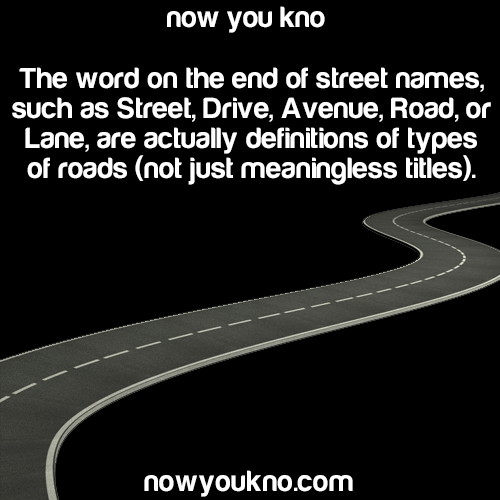
  • road has no special qualifiers. It connects point a to point b.
  • street connects buildings together, usually in a city, usually east to west, opposite of avenue.
  • An avenue runs north south. Avenues and streets may be used interchangeably for directions, usually has median
  • boulevard is a street with trees down the middle or on both sides
  • lane is a narrow street usually lacking a median.
  • drive is a private, winding road

  • way is a small out of the way road

  • court usually ends in a cul de sac or similar little loop

  • plaza or square is usually a wide open space, but in modern definitons, one of the above probably fits better for a plaza as a road.

  • a terrace is a raised flat area around a building. When used for a road it probably better fits one of the above.

  • uk, a close is similar to a court, a short road serving a few houses, may have cul de sac

  • run is usually located near a stream or other small body of water

  • place is similar to a court, or close, usually a short skinny dead end road, with or without cul de sac, sometimes p shaped

  • bay is a small road where both ends link to the same connecting road

  • crescent is a windy s like shape, or just a crescent shape, for the record, above definition of bay was also given to me for crescent

  • trail is usually in or near a wooded area

  • mews is an old british way of saying row of stables, more modernly seperate houses surrounding a courtyard

  • highway is a major public road, usually connecting multiple cities

  • motorway is similar to a highway, with the term more common in New Zealand, the UK, and Austrailia, no stopping, no pedestrian or animal traffic allowed

  • an interstate is a highway system connecting usually connecting multiple states, although some exist with no connections

  • turnpike is part of a highway, and usully has a toll, often located close to a city or commercial are

  • freeway is part of a highway with 2 or more lanes on each side, no tolls, sometimes termedexpressway, no intersections or cross streets.

  • parkway is a major public road, usually decorated, sometimes part of a highway, has traffic lights.

  • causeway combines roads and bridges, usually to cross a body of water

  • circuit and speedway are used interchangeably, usually refers to a racing course, practically probably something above.

  • as the name implies, garden is usually a well decorated small road, but probably better fits an above

  • view is usually on a raised area of land, a hill or something similar.

  • byway is a minor road, usually a bit out of the way and not following main roads.

  • cove is a narrow road, can be sheltered, usually near a larger body of water or mountains

  • row is a street with a continuous line of close together houses on one or both sides, usually serving a specific function like a frat

  • beltway is a highway surrounding an urban area

  • quay is a concrete platform running along water

  • crossing is where two roads meet

  • alley a narrow path or road between buildings, sometimes connects streets, not always driveable

  • point usually dead ends at a hill

  • pike usually a toll road

  • esplanade long open, level area, usually a walking path near the ocean

  • square open area where multiple streets meet, guess how its usually shaped.

  • landing usually near a dock or port, historically where boats drop goods.

  • walk historically a walking path or sidewalk, probably became a road later in its history

  • grove thickly sheltered by trees

  • copse a small grove

  • driveway almost always private, short, leading to a single residence or a few related ones

  • laneway uncommon, usually down a country road, itself a public road leading to multiple private driveways.

  • trace beaten path

  • circle usually circles around an area, but sometimes is like a “square”, an open place intersected by multiple roads.

  • channel usually near a water channel, the water itself connecting two larger bodies of water,

  • grange historically would have been a farmhouse or collection of houses on a farm, the road probably runs through what used to be a farm

  • park originally meaning an enclosed space, came to refer to an enclosed area of nature in a city, usually a well decorated road.

  • mill probably near an old flour mill or other mill.

  • spur similar to a byway, a smaller road branching off from a major road.

  • bypass passes around a populated area to divert traffic

  • roundabout or traffic circle circle around a traffic island with multiple connecting routes, a roundabout is usually smaller, with less room for crossing and passing, and safer

  • wynd a narrow lane between houses, similar to an alley, more common in UK

  • drive shortened form of driveway, not a driveway itself, usually in a neighborhood, connects several houses

  • parade wider than average road historically used as a parade ground.

  • terrace more common in uk, a row of houses.

  • chase on land historically used as private hunting grounds.

  • branch divides a road or area into multiple subdivisions.

Writers need to know stuff like this.

Reblogging for info because there was a bunch of these I didn’t know.

But I know so many avenues that run east west and not north south wtf

Resources For Describing Emotion

wordsnstuff:

Emotions

Specific Emotions

Emotional Wounds

Motivation


Support Wordsnstuff!

☼ Masterlist ☼

wordsnstuff:

image

☼  Masterlist is updated regularly & subject to frequent change 


☼  Writing Help Posts 

☼  Prompt Lists 

Themed Lists

☼ Monthly Reading/Writing Challenges ☼

☼  Synonyms Lists 

☼  Playlists  ☼

Writing Playlist // Spotify **Updated Frequently** 

Things To Listen To When You’re Working *Masterpost*

☼ Resources For Writing 

☼ Miscellaneous ☼

☼  Tags 

Side Notes {Based On Frequently Asked Questions} 

  • You can request playlists. Send me a quote, phrase, concept, etc. and I will make it!
  • If you have a request, I prefer if you send it through my ask box, rather than private message. I get a lot of messages from people and your request may be drowned out or forgotten about. My ask box is where I keep track of reader suggestions/input, so please use that instead. 
  • Anonymous is disabled on this blog for multiple reasons surrounding negative messages that have nothing to do with my actual content, as well as for the purpose of replying privately in order to prevent my followers’ dashboards from being spammed with random asks.

PICTURES // QUOTES // REBLOGS // FAQ

INSTAGRAM // FACEBOOK // TWITTER

For A VERY useful fact, click here

How to Write a Credible Genius

artattemptswriting:

Genius is often thought of as synonymous with “intelligent” or “smart” or “eidetic memory and know-it-all.” but that isn’t the case. True genius, or at least in terms of traits and characterization, is the ability to use what you have in ways that others won’t. Some geniuses are obviously smart, and some are geniuses in ways so subtle that the character appears deluded.

This is something I can (and have) talked about for hours at various
unfortunate people. “Genius characters” is actually an umbrella term
that covers a whole range of character Archetypes, from the Sherlock
Holmes to the Tortured Mastermind; each one is different, because the
genius of a character is inherently subjective. There are a lot of
cross-overs from archetype to archetype, and the overlap can be really
interesting to use when creating your genius character, but I’ve broken
them up as best I can by defining characteristics for simplicity.

Remember to use the archetype as a base and build on from there, to make
your genius characters as interesting as possible; they may be
geniuses, but they are also human. Flesh them out, lace nuances into
their character, make them hate reading or like videogames.

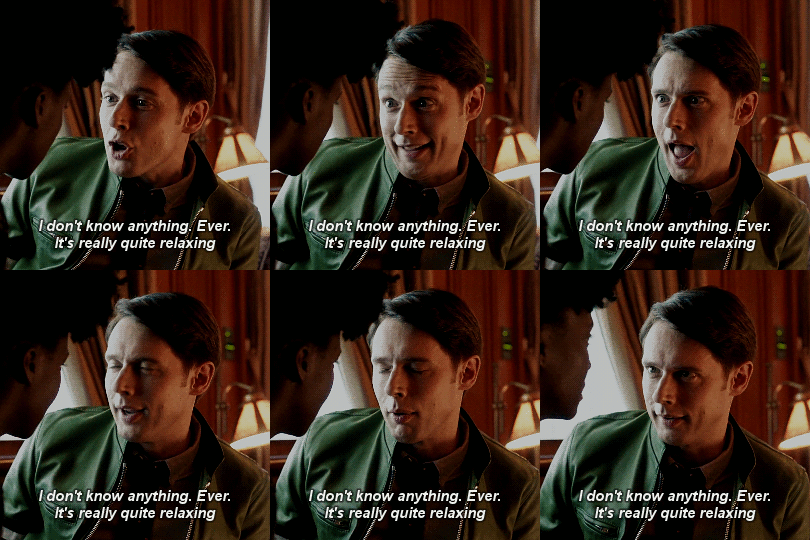
The Ignorant Intellectual

image

I.e, the Dirk Gently.

The Gently-esque archetype is a perfect place to start, because it really demonstrates the subjective nature of a genius character. Arguably, Dirk isn’t a genius at all— he simply follows where the universe takes him, acting on the whims and impulses it gives him, so how can he be a genius?—but the genius comes in when he joins the dots together. He hasn’t been made smart by the holistic power that the universe gave him, but he has learned to adapt and survive.

This kind of genius is defined by a lack of large quantities of knowledge, but a certain intellectual capacity. These characters are usually thrown into (or willing walk into) situations, completely ignorant, where their true genius shines through their ability to talk fast, think outside the box and learn as they go along. They are also enablers, which is what sets the Ignorant Intellectual apart from the Holmes-type genius; whereas a Holmes would have the answer before anyone else, a Gently would find an answer by helping others see it first. For example, they might make one connection that is really obscure, and that will allow others to suddenly work out the rest. As such, these types are great survivors, often through luck and clever bullshitting, but they’re at their best with others.

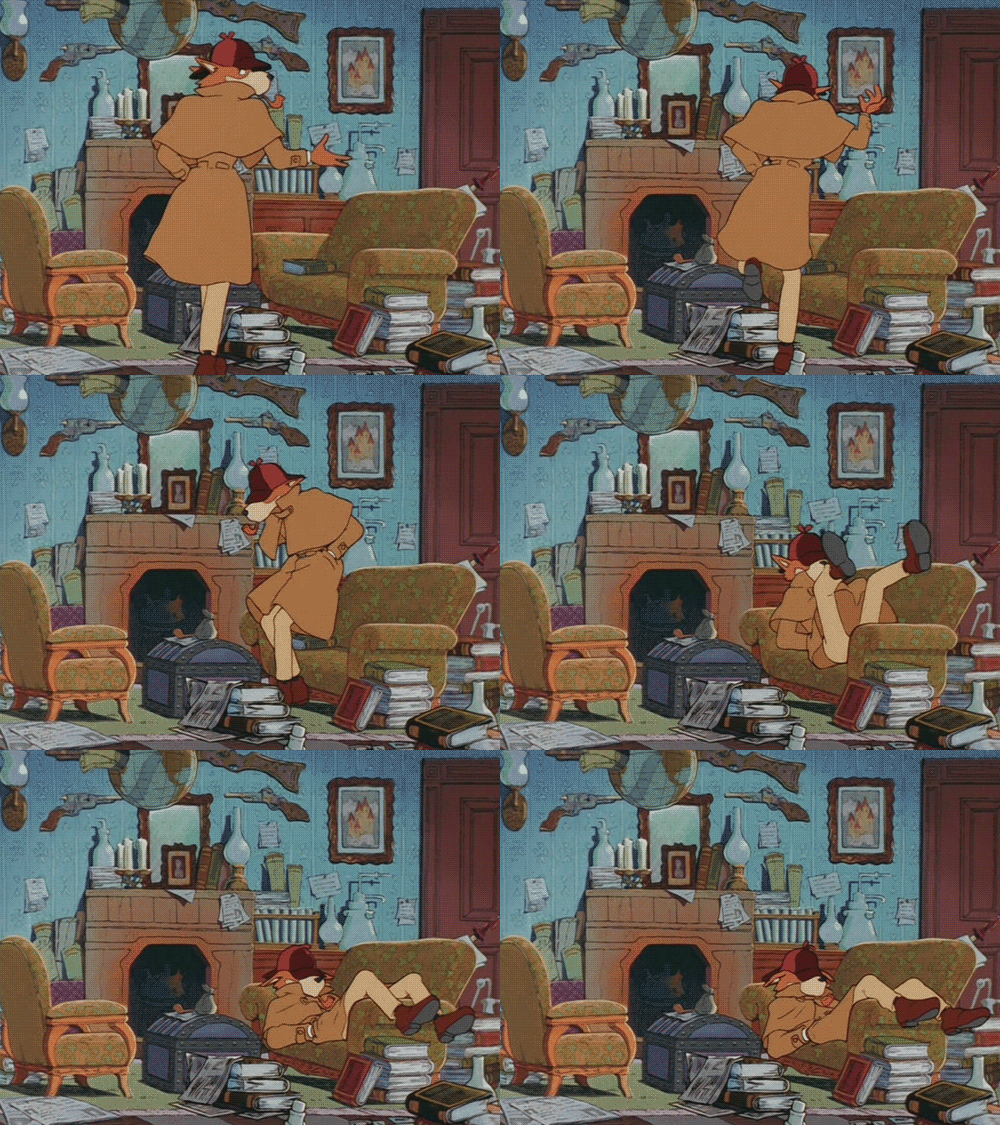
The Naturally Intelligent Intuit

image

I.e, The Sherlock Holmes

And I mean bookHolmes folks, not BBC Sherlock. The Holmes we see on the BBC TV series is better classified as a Tortured Genius; he has natural intelligence, true, but he’s cold and lacks intuition on the same level as his book counterpart.

The Holmes archtype possesses natural intelligence combined with a depth of warmth and intuition. They may often be arrogant or appear aloof, but only because they are ignorant of the superior speed that their mind can work at, or forgetful of it. The thing here is natural intelligence; anyone can learn to think intelligently, but very few are born with a natural ability to process and store information, and then apply it innovatively. However, this intelligence alone doesn’t make for a genius character: they should also possess very good intuition, which is always backed up by evidence supplied by their intelligent logic.

Holmes was a trailblazer in this area. He practically made the archetype, as a matter of fact, but there are aspects of his character that ought to be kept separate. One of these is his reliance on unhealthy coping mechanisms, and another is his tendency to be erratic or eccentric—both of these are traits that defined him as a person-character, rather than marks of his genius archetype.

The Tortured Genius

image

I.e, the Victor Frankenstein

Although not inherently evil, these characters are often plain nasty people—but it’s not their fault, obviously! They would say something like “It’s because I’m so smart, nobody understands me, I’m tortured by my own intelligence to the point where I am are alienated from society—!”

No, Victor, sweetie, it’s because you’re an arrogant arsehole. The archtype isn’t quite that simple, but Doctor Frankenstein is a very good example of the fundamental basics.

I like this one for its flexibility. I mentioned that BBC Sherlock is a Tortured Genius and while book Sherlock almost fits the shoe, his saving grace is his humility and warmth. On the other hand, characters like Doctor Frankenstein and BBC Sherlock are arrogant, and either refuse to acknowledge their flaws or, acknowledging them, refuse to better them. Sometimes, a character like this will actively be worse. BBC’s Sherlock is actually a pretty cheap take on the Tortured Genius, but that may also be because he isn’t a very well-substantiated interpretation of the book canon… anyway, I digress. The point here is that these characters are complex to the point where they twist themselves into knots, often shaped by tragedy or trauma.

They see themselves one way, and the world another. A tortured genius could be anything from initially mild-mannered to downright cruel; either way, their internal or first intentions are usually good. They tend to change throughout their story, as their flaws get in the way and they wrestle with the feeling that nobody is ever going to truly understand who they are. The result is a lot of internalised rage or self-hatred, until they explode or start a downwards spiral of unhealthy coping mechanisms. They often have at least three of the following:

  • A fear of failure that pushes them to extremes
  • Hubris (excessive pride)
  • Arrogance, so much so that they think they can do the impossible (solve impossible cases, reverse death, create life etc)
  • Narcissism designed to cover up serious self-esteem issues
  • Put too much pressure on themselves; think they can reach unattainable goals and experience a huge drop of self-worth when they fail.
  • Unhealthy coping mechanisms
  • Either actively shun others or are shunned because they make no effort to include others that they deem less intelligent.
  • Equate worth to intelligence (see above point)

Something to be wary of is the mental health aspect of a tortured genius. It’s true that these characters are usually depressed or considered insane, but the poor mental health is always caused by their actions, rather than their mental health issues causing them to be a tortured genius. Remember, this archetype is never a very nice person which leads to them being miserable; however, if you had a person with Schizophrenia and they were also a genius when their plot began, they would struggle, yes, but it isn’t the same thing. Anyone with a pre-existing mental health condition would.

Don’t use mental health issues to drive a character like this, because they never excuse the sort of behaviour that the archetype calls for and this only strengthens the stereotype of people with mental health issues being dangerous.

The Accidental Pedant

image

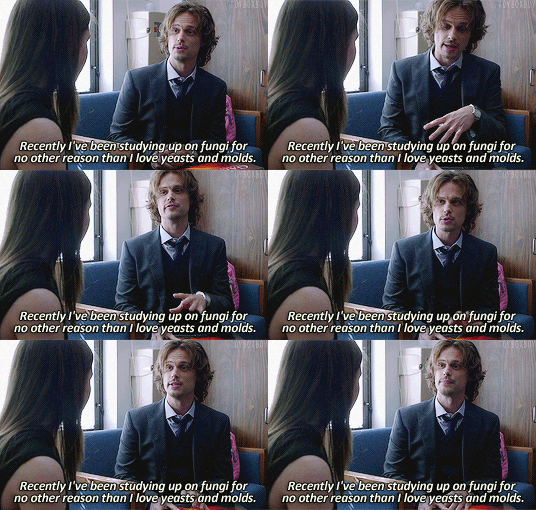
I.e, the Spencer Reid.

I like to call this one the soft genius. They’re the most genuine, kind-hearted of the lot. Half of the time, they don’t even realise their own genius until it’s pointed out to them, and the other half of the time they’re aware of it but don’t consider this aspect of their personality as anything other than a cool way to store information. Usually, their genius is a byproduct, or in combination with, an eidetic memory, incredibly high IQ, asperger’s (although this one is a dicy area, as it can perpetuate harmful stereotypes) or savaunt syndrome. In other words, it’s a passive sort of genius that comes naturally to them because of something out of their control.

These types of geniuses have oodles of information stored in their brains, and love to share it. It’s just that… not everyone wants to hear it. They spontaneously blurt out facts, but it doesn’t seperate them from others. Unlike the majority of genius archetypes, the Accidental Pedant is still loveable, kind, thoroughly sincere and usually gets classified as a dork. In short: all round goodness stuffed full of knowledge.

Some things to avoid in this archetype are Autistic Spectrum Condition-coding (if your genius is on the autistic spectrum, then they’re on the autistic spectrum. Make it explicit and don’t try to use the fact to negate the value of their intelligence) and infantilization. Too often, the Accidental Pedant is shown to be like a big baby with adult intelligence. In the case of Spencer Reid, you can be mistaken to think that at first as the other members of his team call him “kid”; but as the seasons continue it becomes clear that he is a valued, equal member of the group respected for more than his eidetic memory.

The Trickster

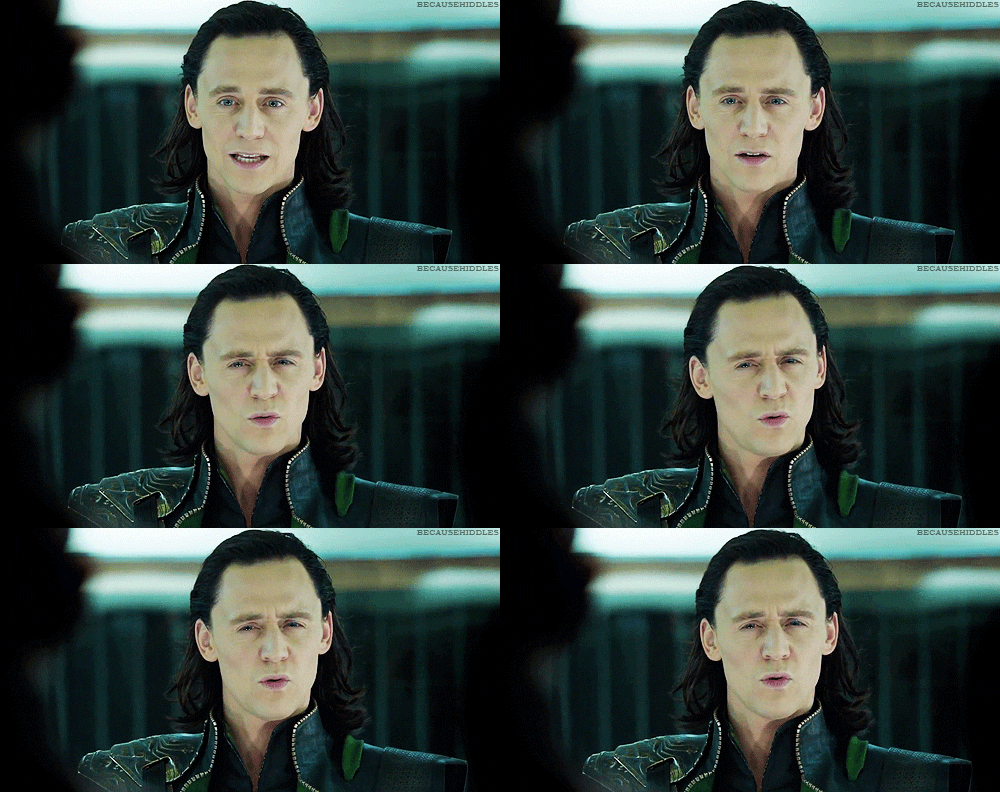
I.e, the Loki (of Norse mythology)

As with Sherlock
Holmes, I’m talking about the archetype seen in mythological figures,
like Anansi or Loki, rather than modern popular media. (But I couldn’t
resist the marvel Loki gif).

As with the Tortured Genius, the
Trickster isn’t inherently evil but is still… questionable. They
think first and foremost of themselves before others, and have no
problem with causing chaos to meet their ends. Their genius is one of
wit and wily charm, a smooth tongue and all the cunning of a high-flying
conman. In other words, some might kill or endanger others for their own
delight (I’m looking right at you, Loki) but others would steal,
cheat and lie but never kill. And sometimes pay back those that they
have robbed, in due course.

Usually a jack-of-all-trades, with

They walk the line between evil mastermind and trickster, but they have two defining traits that set them apart:

  • Often feel remorse and know the limits that they should stay within. Leaving these limits usually leads to their downfall. More often than not, they have no desire to exceed the limits.
  • Their motivations are skewed, but not truly evil, and usually small. They would endanger their family to get some satisfaction after a petty slight, but wouldn’t harm their family in order to take over the world or exceed their station (mythological Loki being the former and MCU the latter)

The Evil Mastermind

i.e, The Moriarty

Immoral, chaotic, cruel; this genius is one who channels all of their creative energy into wrongdoings. Unlike the Trickster, these wrongdoings are pure horrors; they are intended to cause harm and are based on larger ambitions than brief amusement or emotional satsfaction. They are usually intelligent in all forms, and deeply selfish (or they believe that they are helping their family or a loved one, but actually they’re just hurting a lot of people). The ends will always justify the means, and nothing else matters after that.

Some like to have people do their foul play for them, and others like to get their hands dirty themselves. This is the sort of genius who carries themselves with class, style and sophistication; they are fully aware of their own intelligence, but are usually careful to avoid a downwards spiral.

You may want to keep in mind that not every antagonist is an evil mastermind. Macbeth would probably more accurately be described as a tortured genius, as would Theon Greyjoy and Ryzek Noavek. Each of these genius archetypes can fall into the role of either antagonist or protagonist; say, an evil mastermind becomes a highly immoral protagonist for personal gain. It would be heckin awesome to see an Accidental Pedant as an antagonist, if the cards were played right.

Words to replace said, except this actually helps

portmanteau-bot:

nichelle-my-belle:

imagines–assemble:

msocasey:

I got pretty fed up with looking for words to replace said because they weren’t sorted in a way I could easily use/find them for the right time. So I did some myself.

IN RESPONSE TO
Acknowledged
Answered
Protested

INPUT/JOIN CONVERSATION/ASK
Added
Implored
Inquired
Insisted
Proposed
Queried
Questioned
Recommended
Testified

GUILTY/RELUCTANCE/SORRY
Admitted
Apologized
Conceded
Confessed
Professed

FOR SOMEONE ELSE
Advised
Criticized
Suggested

JUST CHECKING
Affirmed
Agreed
Alleged
Confirmed

LOUD
Announced
Chanted
Crowed

LEWD/CUTE/SECRET SPY FEEL
Appealed
Disclosed
Moaned

ANGRY FUCK OFF MATE WANNA FIGHT
Argued
Barked
Challenged
Cursed
Fumed
Growled
Hissed
Roared
Swore

SMARTASS
Articulated
Asserted
Assured
Avowed
Claimed
Commanded
Cross-examined
Demanded
Digressed
Directed
Foretold
Instructed
Interrupted
Predicted
Proclaimed
Quoted
Theorized

ASSHOLE
Bellowed
Boasted
Bragged

NERVOUS TRAINWRECK
Babbled
Bawled
Mumbled
Sputtered
Stammered
Stuttered

SUAVE MOTHERFUCKER
Bargained
Divulged
Disclosed
Exhorted

FIRST OFF
Began

LASTLY
Concluded
Concurred

WEAK PUSY
Begged
Blurted
Complained
Cried
Faltered
Fretted

HAPPY/LOL
Cajoled
Exclaimed
Gushed
Jested
Joked
Laughed

WEIRDLY HAPPY/EXCITED
Extolled
Jabbered
Raved

BRUH, CHILL
Cautioned
Warned

ACTUALLY, YOU’RE WRONG
Chided
Contended
Corrected
Countered
Debated
Elaborated
Objected
Ranted
Retorted

CHILL SAVAGE
Commented
Continued
Observed
Surmised

LISTEN BUDDY
Enunciated
Explained
Elaborated
Hinted
Implied
Lectured
Reiterated
Recited
Reminded
Stressed

BRUH I NEED U AND U NEED ME
Confided
Offered
Urged

FINE
Consented
Decided

TOO EMO FULL OF EMOTIONS
Croaked
Lamented
Pledged
Sobbed
Sympathized
Wailed
Whimpered

JUST SAYING
Declared
Decreed
Mentioned
Noted
Pointed out
Postulated
Speculated
Stated
Told
Vouched

WASN’T ME
Denied
Lied

EVIL SMARTASS
Dictated
Equivocated
Ordered
Reprimanded
Threatened

BORED
Droned
Sighed

SHHHH IT’S QUIET TIME
Echoed
Mumbled
Murmured
Muttered
Uttered
Whispered

DRAMA QUEEN
Exaggerated
Panted
Pleaded
Prayed
Preached

OH SHIT
Gasped
Marveled
Screamed
Screeched
Shouted
Shrieked
Yelped
Yelled

ANNOYED
Grumbled
Grunted
Jeered
Quipped
Scolded
Snapped
Snarled
Sneered

ANNOYING
Nagged

I DON’T REALLY CARE BUT WHATEVER
Guessed
Ventured

I’M DRUNK OR JUST BEING WEIRDLY EXPRESSIVE FOR A POINT/SARCASM
Hooted
Howled
Yowled

I WONDER
Pondered
Voiced
Wondered

OH, YEAH, WHOOPS
Recalled
Recited
Remembered

SURPRISE BITCH
Revealed

IT SEEMS FAKE BUT OKAY/HA ACTUALLY FUNNY BUT I DON’T WANT TO LAUGH OUT LOUD
Scoffed
Snickered
Snorted

BITCHY
Tattled
Taunted
Teased

reblog to save a writer 

excellent resource

excesource.


This portmanteau was created from phrase ‘excellent resource’. Beep-boop. Portmanteau^bot^1

100 Words for Facial Expressions

smut-101:

1. Absent:

not attentive, preoccupied, absent-minded

2. Agonized: as if in pain or tormented
3. Alluring:

powerfully and mysteriously attractive or fascinating; seductive

4. Appealing: attractive, in the sense of encouraging goodwill and/or interest
5. Beatific:

bestowing bliss, blessings, happiness

6. Bilious:

spiteful; bad-tempered

7. Black:

gloomy, pessimistic, dismal

8. Bleak:

without hope or encouragement; depressing; dreary

9. Blinking: surprise, or lack of concern
10. Blissful: showing a state of happiness or divine contentment
11. Blithe: carefree, lighthearted, or heedlessly indifferent
12. Brooding:

showing unhappiness of thought or appears darkly menacing

13. Bug-eyed: frightened or surprised, having the eyes bulging

14. Chagrined: humiliated or disappointed
15. Cheeky:

impudent or irreverent, typically in an endearing or amusing way

16. Cheerless:

joyless, depressing

17. Choleric: hot-tempered, irate
18. Coy:

shyness or modesty that is intended to be alluring
19. Crestfallen:

dejected, dispirited, discouraged

20. Darkly:

vaguely threatening or menacing manner

21. Deadpan:

deliberately impassive or expressionless

22. Dejected: downcast, depressed, dispirited

23. Derisive:

expressing contempt or ridicule

24. Despondent:

showing profound hopelessness, discouragement, or gloom

25. Doleful:

expressing sorrow, mournful
26. Dour:

relentlessly severe, stern, or gloomy in manner or appearance

27. Downcast: low in spirit
28. Dreamy:

pleasant, peaceful, and relaxing

29. Ecstatic:

in a state of ecstasy, full of joy, rapturous:

30. Etched: a feeling clearly visible on someone’s face

31. Faint: cowardly, weak, or barely perceptible
32. Fixed:

set or intent upon something; steadily directed

33. Furtive:

suggestive of guilty nervousness

34. Gazing:

look intently, especially in admiration, surprise, or thought

35. Glancing:

to look quickly or briefly

36. Glaring:

having a fixed look of hostility, fierceness, or anger

37. Glazed:

a fixed, dazed, or lifeless expression

38. Gloomy:

filled with or showing gloom; sad, dejected, or melancholy.

39. Glowering:

sullen dislike, discontent, or anger
40. Glowing:

showing the radiance of health, excitement

41. Grim: very serious or gloomy

42. Grave:

something that is serious or doing something in a solemn manner

43. Haunted:

showing signs of mental anguish or torment

44. Hopeless: depressed by a lack of encouragement or optimism
45. Hostile: aggressively angry, intimidating, unfriendly
46. Hunted:

appearing worn or harassed as if one is being pursued.

47. Impassive:

without emotion; apathetic; unmoved.

48. Inscrutable: mysterious, unreadable
49. Jeering: insulting or mocking
50. Languid:

lacking in spirit or interest; listless; indifferent

51. Leering:

look or gaze in an unpleasant, malicious, or lascivious way

52. Meaningful:

full of meaning, significance, purpose
53. Mild: easygoing, showing gentleness

54. Mischievous: annoyingly or maliciously playful; teasing
55. Moody:

gloomy, depressed, or sullen; ill-humored

56. Pained:

expressing distress, anguish, or resentment

57. Pallid:

lacking in vitality or interest

58. Peering: look keenly or with difficulty at someone or something

59. Peeved:

annoyed; irritated; vexed

60. Petulant: impatient irritation, especially over some trifling annoyance

61. Pitying: sympathetic, expressing pity
62. Pleading: seeking apology or to appeal earnestly or humbly

63. Pouting:

to show displeasure or wearing a sullen expression

64. Quizzical:

indicating mild or amused puzzlement

65. Radiant:

bright with joy, hope

66. Roguish:

playfully mischievous, especially in a way that is sexually attractive

67. Sanguine:

cheerfully optimistic, hopeful, or confident

68. Sardonic:

grimly mocking or cynical

69. Scornful: contemptuous or derisive
70. Scowling:

to have a gloomy or threatening look

71. Searching:

acutely observant or penetrating

72. Set:

to direct with fixed attention

73. Shamefaced:

feeling or expressing shame or embarrassment
74. Slack-jawed:

an indication of astonishment, bewilderment

75. Sly:

showing a cunning and deceitful nature

76. Snarling: surly or threatening manner

77. Sneering:

contort the face in a manner that shows scorn or contempt

78. Somber:

oppressively solemn or sober in mood; grave

79. Sour:

harsh in spirit or temper; austere; morose; peevish

80. Stolid:

calm, dependable, and showing little emotion or animation

81. Straight-faced:

with a blank or serious facial expression

82. Sulky: morose, bad-tempered, and resentful; refusing to be cheerful.

83. Sullen:

showing irritation or ill humor by a gloomy silence or reserve

84. Taunting:

to reproach in a sarcastic, insulting, or jeering manner; mock

85. Taut: strained or tense
86. Tense:

in a state of mental or nervous strain; high-strung
87. Tight:

firmly or closely fixed in place; secure
88. Unblinking:

looking at something in a honest and accurate way

89. Vacant:

having or showing no intelligence or interest ; blank
90. Veiled:

not openly or directly expressed; masked; disguised; hidden
91. Wan:

of an unnatural or sickly pallor; pallid; lacking color

92. Wary:

watchful, cautious, or alert
93. Wide-eyed: having one’s eyes wide open in amazement

94. Wild-eyed:

an expression of panic or desperation in their eyes

95. Wistful:

showing a feeling of vague or regretful longing

96. Withering: weak, thin
97. Woeful: full of grief; wretched; unhappy

98. Wolfish:

resembling a wolf, in being rapacious, voracious, or lascivious

99. Wrathful:

full of or characterized by intense anger

100. Wry: an expression of disgust, disappointment, or annoyance.

Alternatives for 25 overused words in writing

september-daydream:

myrichlandlibrary:

colonelstudy:

1. Interesting– note worthy; thought-provoking; fascinating; attracting; appealing; attention-grabbing; captivating; gripping; invigorating; engrossing; engaging; electrifying.  

2. Beautiful– striking; stunning; magnificent; lovely; charming; gorgeous; radiant; dazzling.

3. Good– acceptable, wonderful, exceptional; positive; brilliant; first-rate; notable; stellar; favorable; superb; marvellous; prime.

4. Bad– awful; lousy; poor; unacceptable; crummy; dreadful; rough; inferior; substandard; atrocious; appalling; dreadful; defective.

5. Look glance; fixate; observe; stare; gaze; peer; scan; watch; study; browse; eye; glimpse; review; inspect.

6. Nice lovely; superior; pleasant; satisfying; delightful; likeable; agreeable; correct; adequate; swell; fair; okay; approved.

7. Very extremely; exceedingly; exceptionally; immensely; tremendously; abundantly; particularly; remarkably.

8. Fine- satisfactory; worthy; respectable; exquisite; suitable; well; imposing; decent; admirable; praise-worthy; decent.

9. Happy– cheerful; delighted; pleased; content; amused; thrilled; elated; thrilled; ecstatic; on cloud 9. 

10. Really– genuinely; truly; honestly; actually; undoubtedly; certainly; remarkably; incredibly; downright; unquestionably; extremely.

11. Sad– miserable; gloomy; devastated; down at heard; distraught; distressed; dispirited; sorrowful; downcast; feeling blue; desolate.

12. Big– massive; huge; giant; gigantic; enormous; large; colossal; immense; bulky; tremendous; hefty; sizable; extensive; great; substantial. 

13. Shocked– taken aback; lost for words; flabbergasted; staggered; outraged; astonished; astounded; stunned; speechless; appalled.

14. Small– tiny; petite; mini; miniature; microscopic; minuscule; compact; pocket-sized; cramped; puny; undersized; limited; meager; modest; minute; pint-sized. 

15. Angry– irate; enraged; touchy; cross; resentful; indignant; infuriated; wound-up; worked-up; seething; raging; heated; bitter; bad-tempered; offended; frustrated. 

16. Know– understand; comprehend; realize; learn; perceive; recognize; grasp; sense.

17. Change– alter; transform; replace; diversify; adjust; adapt; modify; remodel; vary; evolve; transfigure; redesign; refashion; advance; transition; shift; adjustment.

18. Old– aged; ancient; matured; elderly; senior; veteran; decrepit; seasoned; venerable; past one’s prime; doddering; senile.

19. Think– ponder; reflect; conceive; imagine; contemplate; consider; determine; realize; visualize; guess/assume; conclude; envision. 

20. Funny– comical; ludicrous; amusing; droll; entertaining; absurd; hilarious; silly; whimsical; hysterical; joking; witty; facetious; slapstick; side-splitting; knee-slapping.

21. Go– move; proceed; advance; progress; travel; walk; journey; depart; exit; flee; make one’s way; clear out; get underway.

22. Give– grant; donate; hand-out; present; provide; deliver; hand over; offer; award; bestow; supply with; contribute to; send; entrust.

23. Get– acquire; obtain; receive; gain; earn; gather; collect; buy; purchase; attain; score; secure; take possession of; grab.

24. Easy– effortless; simple; clear; smooth; straightforward; uncomplicated; painless; accessible; apparent; basic; plain; child’s play; facile; elementary; cinch. 

25. Fast– agile; brisk; rapid; nimble; swift; accelerated; fleeting; high-speed; active; dashing; winged; hurried; turbo. 

Hang in there, NaNoWrMo peeps!

Re blog to save a life’s