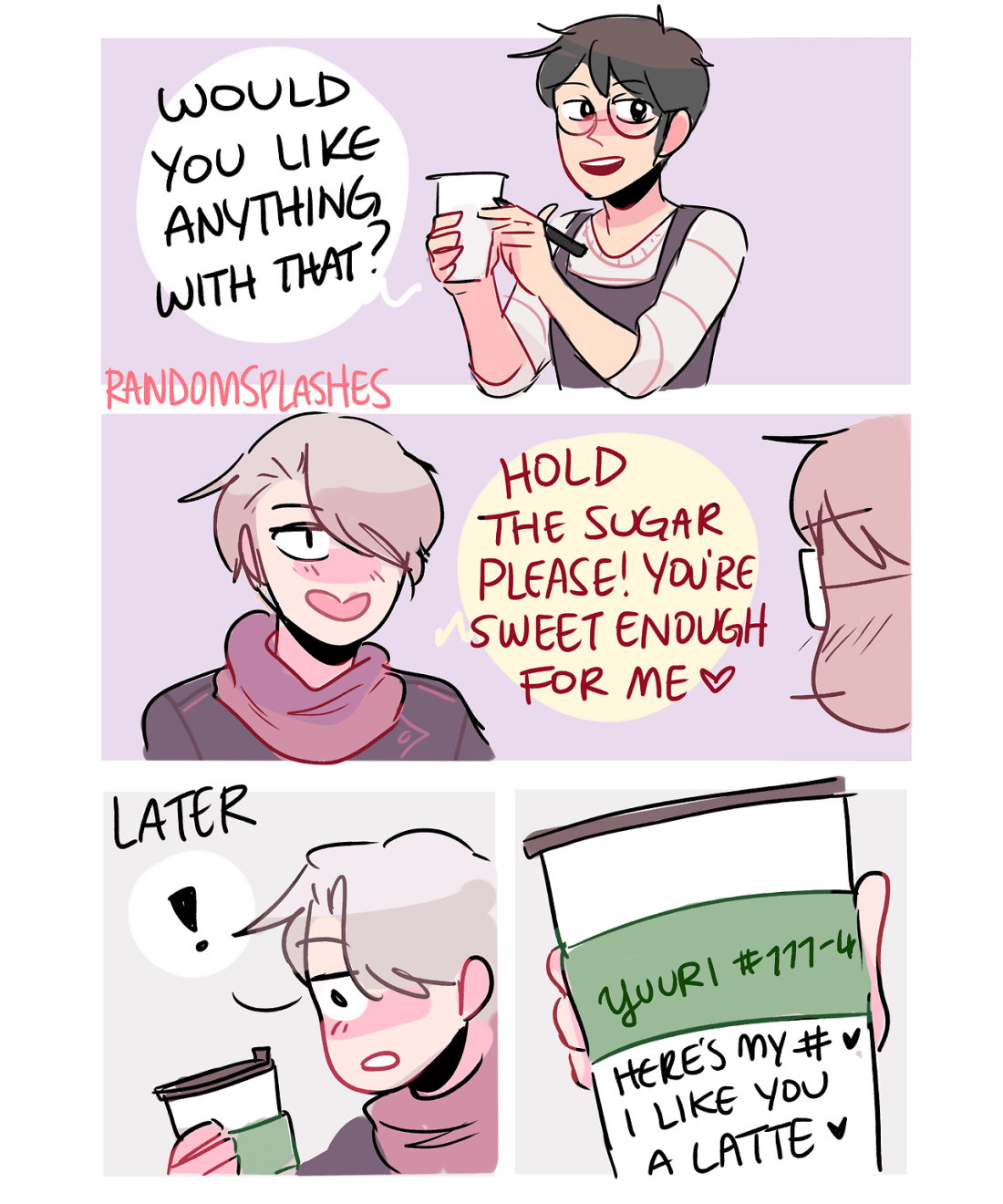
BEHOLD, everyone: my favourite person on this planet who is a regular and fantabulous caffeinator of me, badacts, via ko-fi ❤
Thea takes one look around Eden’s Twilight and says, “So this is where your little friends hang out? Somehow I’m not surprised.”
Kevin rolls his eyes. “Last time we drank together it was cheap tequila in the red dorms.”
“Yes, and I have no desire to relive that experience,” Thea replies. “They better have good drinks.”
“They’re fine,” Kevin says, ushering her to the bar with a hand on the small of his back. She lets him even though she’s hardly the fragile type. They’re of a height, and it’s always been something he likes about her. It’s hot, for a start.
It hasn’t been straightforward, trying again. It’s impossible to start over, but this feels like a second chance. Kevin, despite all of his mistakes and his youth, knows deep in his chest that there’s no one else for him like Thea. And they’ve been trying, starting with…dates.
They never did any of this the first time round – that was more fucking in empty dorm rooms and texting when Riko wasn’t watching – so it’s. Nice. It’s – something. Kevin hasn’t decided how he feels about it yet, but he knows he wants more.
Thea orders for him but lets him carry the drinks to a tall table off the wall. She draws eyes from around the room, and it’s not clear whether it’s because of her looks or the fact she’s a famous athlete. Either way, her attitude is all dismissal, like no one in the building is worth her time – besides Kevin.
Kevin likes being worth her time.
Thea, sipping a drink so yellow it glows, tucks her high-heeled foot between his on the bar of his stool and says, “This music? Really?”
“Take your complaints to the disc jockey,” Kevin recommends, and tries not to think about running a hand up her smooth leg. It’s an even split as to whether she would let him or kick him off his chair.
“Disc jockey,” Thea snorts. “We’re not from 1995. Unlike this song.”
Kevin heard this song on the radio on the way over, on the normal top-40 station he leaves his car tuned to, shakes his head between mouthfuls of his drink but doesn’t say anything.
Thea looks over the crowd, frowns like they aren’t meeting her expectations, and then takes another sip of her own drink. She taps a nail on the glass – she always has her nails done, squared off because of Exy but in jewel-bright colours. “This is good though.”
“‘Good’?”
“The company is alright, too,” she continues as though Kevin didn’t say anything.
“I aim to please,” Kevin says, though he can feel his mouth quirking up and knows she can see it.
She looks him dead in the eye and smiles the smile that he likes – more than likes – all heat and challenge.
“Another drink?” Kevin asks.
“Hm,” Thea says, looking at her glass pointedly. It’s still half-full, and just like that Kevin’s mood drops. She’s been at him for what she calls his ‘bad habits’ for a little while now. Well, she did call it that, up until she got pissed at him and called it his ‘shitty coping mechanism’, and told him to get his ass into therapy. “Why don’t you slow down?”
Kevin scowls. “What does it matter?”
“If you get too drunk to walk I’m leaving you here,” Thea tells him, “and then you definitely won’t get laid tonight, or in the foreseeable future.”
“Only because Andrew would kill you.”
Thea snorts. “As if, Day. In his dreams maybe.”
Kevin pointedly pushes his empty glass away from him. “Happy?”
She leans across the table, grabs the front of his shirt, and jerks him across the table so she can kiss him on the mouth. She’s generous with it, her mouth plush and controlling, her spare hand scratching at the back of his neck the way he likes.
When she breaks it, Kevin stays in the spot she’s put him, the edge of the table cutting into his belly and his hands spread on the surface of it in the pooling condensation. It takes him a moment of processing to even recognise those things are what he’s feeling.
“Sure,” she says, her voice a purr. Kevin feels it more than hears it. “But not as happy I’ll be when you’re in therapy.”
Kevin doesn’t lean back, though that does shatter the moment a little. He rests his elbow on the table and leans on it, casual like his heart isn’t drumming. “And what would you know about therapy?”
“You think I didn’t start seeing someone the second I graduated?” Thea asks. “I didn’t turn out this well-adjusted without professional intervention.”
Kevin blinks. “Really?”
“Of course,” Thea replies, tracing his mouth with a finger almost absently. “I still go now.”
She’s dead serious, even with the lilt of humour in her tone. Kevin touches a finger to the raven pendant she still wears about her throat, pressing the metal tight to her skin, and says, “Are you sure you should still be wearing this, then?”
“What, because I’m not as psychologically damaged anymore?” she says, and then smirks. “Maybe. Maybe not. Either way, it’s not a bad reminder.”
Kevin, whose life has been defined by the number on his face, and the chess piece covering that, and the scars on his hand, kind of understands that. He might understand it better after therapy.
Maybe. Maybe not. The only thing he knows for sure is that when Thea looks at him like she is right now, there’s not much he won’t agree to.
“(Aug 3rd, 2017) This week, the trailer for the film adaptation of “Call Me By Your Name” hit the Internet, while the movie started showing at Sundance. Both the trailer and the movie were welcomed with praise and excitement by most of the public, but my reaction can’t be other than worry and fear. Fear for the kids who will stumble upon this movie, along with the multitude of similar material that already exists, and think that the predatory and manipulative relationship portrayed in it is, as the critics have been describing it, a “sexy, passionate summer romance”.
“Call Me By Your Name” is a film about the “forbidden” romance between a closeted seventeen year old boy and a twenty-four year old man. Based on the book of the same name, the movie portrays a relationship in which the older adult clearly knows that what he’s doing is wrong, yet he still starts a romantic and sexual relationship with a high-school aged teenager. The story ends with Oliver (the older man) married to a woman while Elio (the younger man, who was a teenager at the time of their “affair”) is still heavily affected by their relationship a decade and a half later.
It doesn’t seem, from his interviews, that André Aciman intended to write the story of a predatory adult manipulating a kid, but that’s the story told. The fact that the author of the book is a straight man only complicates any possible analysis, and raises the question of if, maybe, the choice to portray a teenager “falling” for a man seven year older was caused by the prejudiced idea that LGBTQ people are predatory; or by straight men’s own tendency to prey on inexperienced teenagers and see nothing wrong with it.
The people involved in the film see no fault in the narrative either, and Armie Hammer said in an interview that “nothing about the relationship was predatory”. The movie isn’t a cautionary tale about adults manipulating a closeted teenager, but it should be.
The discussion around “Call Me By Your Name” is a conflicting one. The movie both perpetuates (even if it doesn’t want to) the idea that gay men prey on young kids, while it also normalizes and romanticizes relationships between adult men and teenagers. And, while the first instinct is to say “hey, no, LGBTQ people aren’t inherently predatory”, the overwhelmingly positive response (even from LGBTQ circles!) makes us wonder if it isn’t even more important to say “yeah, some LGBTQ people are predatory, and we have to protect young LGBTQ kids”.
The fact is that, though of course we aren’t born predators trying to turn the innocent straight youth gay, or trick the heterosexuals into sleeping with us; there are predators in our spaces, often protected by the idea that, because a space is LGBTQ, it will be safe.
I’d hoped that the response to “Call Me By Your Name” would be of swift condemnation (akin to the quick response to allegations of PWR BTTM member Ben Hopkins being an abuser, or the major outrage every time a show has killed a sapphic character in the last couple of years) or, at the very least, the start of a sincere discussion of how often isolated and closeted kids find themselves in unsafe situations when attempting to explore their sexuality. Instead, not only is the response overwhelmingly positive but, what’s worse, all criticisms are being shut down with either accusations of homophobia or defenses of abuse.
“Call Me By Your Name” isn’t okay because “Pretty Little Liars” has a victim marry her abuser or because Woody Allen keeps making movies where men in their forties fall for nineteen-years-old girls. Abuse culture is abuse culture, and these portrayals of abuse (including the warped and romanticized image of “Lolita” that has spread through pop culture despite the original novel being a horror story about an abuser and his prey) are all equally wrong, whether they depict heterosexual people or gay people as abusers.
Sure, toxic relationships are a common theme in fiction, and “Lolita” is a staple of literature because it so hauntingly portrays the mentality of an abuser. If “Call Me By Your Name” intended to be (like the original novel by Vladimir Nabokov) an introspection into the mind of a predator, or even a portrayal of the trauma that dating adults causes teenagers (like the dreadful, but accurate “Abzurdah”), there wouldn’t be a problem with it. And, just like we criticize heterosexual romances for normalizing and romanticizing abuse, we should be able to apply this same criteria to gay media.
But the most worrisome part of this argument isn’t the discussion over whether we can ever portray LGBTQ people as abusive (and how these narratives should be framed) but the argument that there is no abuse at all, and because a seventeen year old teenager is legally able to consent within the context of the film, there is nothing wrong with them sleeping with an adult in their mid-twenties. And what’s genuinely, truly scary, is that it’s not teenagers who don’t know better making these arguments, but actual adults in their twenties (and even older). There are people outing themselves as potential predators as a defense of this movie, and the majority of the Internet doesn’t seem to care one bit.
Maybe the most controversial part of the “it’s legal and so it’s okay” argument is the fact that age of consent laws are often frail and even illogical constructs. In Italy, where the story of “Call Me By Your Name” is set, the age of consent is fourteen. In the United States, where Oliver is from, the age of consent ranges from sixteen to eighteen. Some countries have an age of consent as low as twelve and, up until a handful of years ago, the age of consent in the United Kingdom was sixteen for heterosexual couples and twenty-one for gay couples.
What’s important to remember is that the law is not the end-all-be-all of morality, and that something being legal (like gay panic laws, the Industrial Prison Complex, or forced genital mutilation) or illegal (like existing as a gay person, abortion, or consenting adults practicing sex work) doesn’t magically make it right or wrong.
(Most of us) understand that, though they are both under the age of consent and it’s not directly punishable by law in most places, a twelve year old and a sixteen year old should not be having sex. There is an understanding that, no matter how smart or mature or physically developed a twelve year old is, there are certain vital stages of development that separate them from a sixteen year old. Because of these stages of development it’s that consent, majority, responsibility and accountability are given to people in stages, allowing them certain rights and obligations as they grow older, with twenty-one being the age when most countries consider a person fully mature. But, while it’s generally understood that the stage between twelve and sixteen years of age creates a kind of boundary, the abuse culture that we live in makes it so the lines get blurrier as teenagers get older, leaving vulnerable young people to be manipulated by adults with little to no consequences.
Always, in these discussions, we end up bringing up the anecdotal evidence. People will argue that their parents met when their mom was a teenager and their dad was in his mid-twenties “and yet they’re happily married!”, or think of a fling they had as a teenager themselves with an adult person that didn’t affect them much. What the overwhelming majority of anecdotal evidence actually proves is that most people who dated an older adult in the fifteen-to-nineteen stage experienced some kind of abuse. Even though a lot of these people can’t actually recognize it as abuse until it’s been pointed to them as such, it still is.
Young people dating older adults, particularly young people still in high-school, are still developing emotionally, sexually, and intellectually; and they don’t have the social and economic position that an older adult might have. They are more susceptible to manipulation, likely to have their boundaries trespassed and their consent forced; and at-risk youth are the most prone to be targeted by predatory adults.
LGBTQ kids are particularly endangered, especially closeted youth. Though not every LGBTQ teenager will find themselves isolated and without resources, it’s still a common experience, and one that can be exploited. When a more experienced adult presents themselves as the one source of wisdom and hope in an otherwise unwelcoming surrounding, and asking for counsel or help might mean outing themselves, the chances of LGBTQ teens ending in abusive relationships without even being aware that they are being taken advantage of are huge.
The refusal to portray abusive relationships as abusive only further endangers teenagers. From the “Twilight” books to films like “Call Me By Your Name”, the portrayal of these relationships as a non-issue convinces teenagers that not only are relationships with older adults acceptable, but sometimes even desirable. Given the prevalence of gay narratives where one’s “one true love” is what finally allows them to come out and be happy, and the overwhelming presence of romances between teenagers and older people; gay and bisexual teens often think that a relationship with an older person might be a necessary stepping stone or even the only possible outcome of the path to being out and proud.
It’s time to start holding ourselves and everyone around us accountable for harboring, spreading and defending these ideas. All of society is guilty of upholding a culture that normalizes abuse and protects abusers. But it’s particularly important that we, as LGBTQ people, remember that protecting our own, sometimes, means protecting the most vulnerable among us; not just from the outside prejudice that we’re all dangerous, but also from the abusers in our communities.
Parting note: It was incredibly hard not to write this as a personal essay on how the trauma of these experiences has marked me and mine, and why the discussion surrounding this movie personally wounds me, because I hope that an attempt at a less emotional talk will reach more people. Still, I urge you to read, if you can, this personal account about fandom’s normalization of abuse and how it directly affects victims.”
yeah um everyone defending this film can drop dead
headcanon: neil made an instagram account, so andrew made an instagram account. he didn’t plan on posting anything, but he took a picture of neil one night and decided why not? he didn’t care, it was an okay picture and he posted it right after he took it. he didn’t think neil even realized, but then his phone started beeping with notifications when the foxes saw what he posted, and neil leaned over to look at his screen.
“you posted that?”
“what does it look like?”
“why?”
andrew didn’t answer. “do you want me to take it down?”
“no.”
neil was holding back a smile, but the look in his eyes gave it away. andrew didn’t understand why. it was just a picture.
a week later, he posted another one. he didn’t care what the others were thinking or what comments they made, he liked the smile neil got on his face every time he looked down at his phone and saw andrew had posted something,
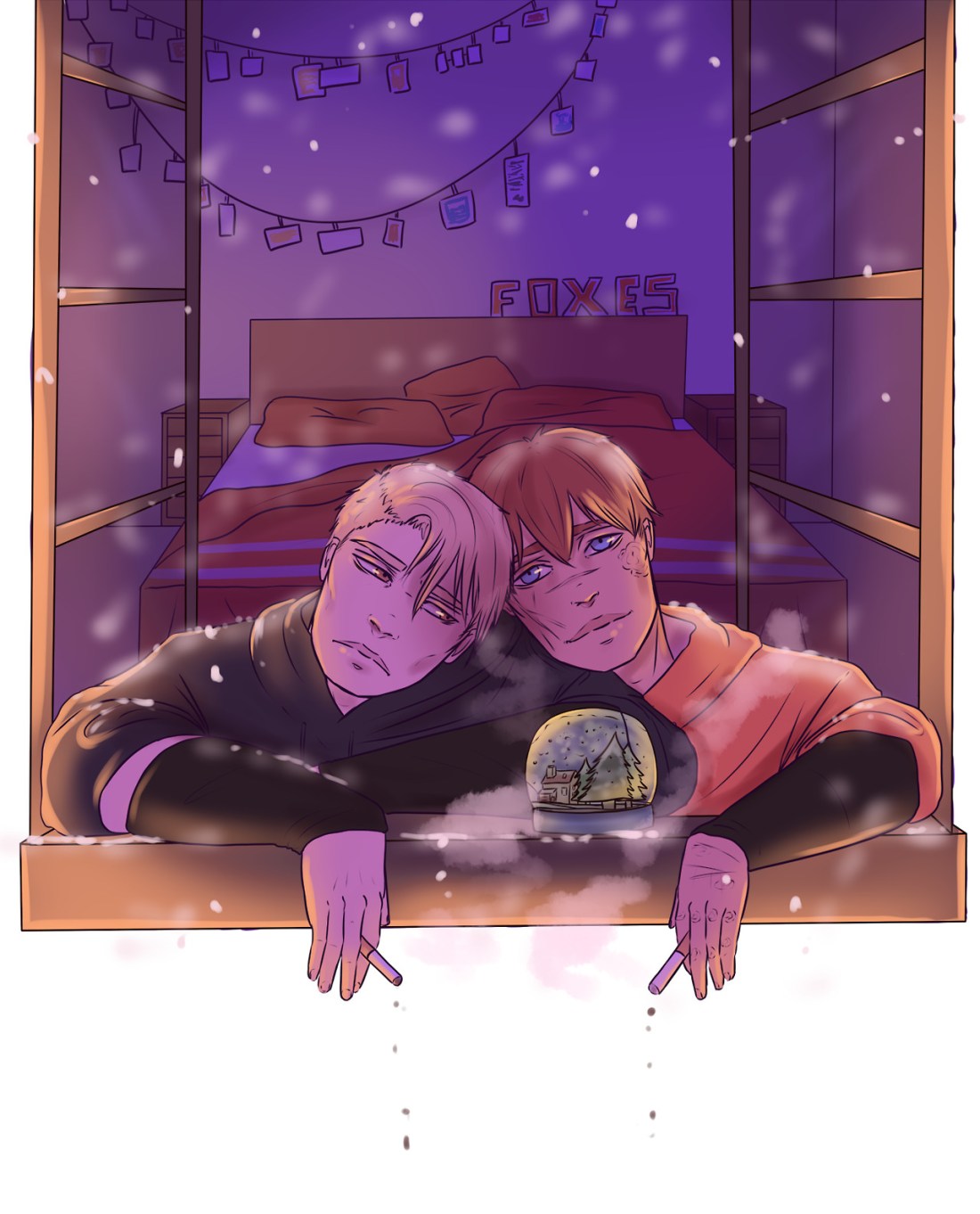
HEY @mixeurants MY FELLOW BAGUETTE HERE IS YOUR CHRISTMAS PRESENT YEAYY
You asked for Andreil, you asked for snowball, please have it. First attempt at doing snow in months please forgive this baguette for her awkward snow skills.
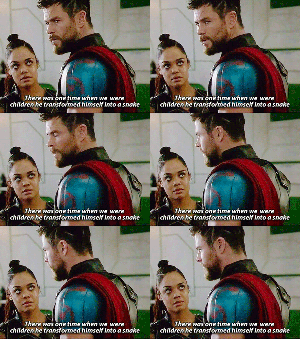
i’m 101% sure that this entire line was improv and tom couldn’t help it
“Yeah, that was basically, we did about six different versions of that story, and that was just us standing around while the cameras were rolling and I would just feed them lines and feed Chris ideas for stories. I’d say, “Do another one, in this one say: ‘I was walking through a field, and I saw a lovey Turkish rug in the middle of the grass, and I love Turkish rugs, so I went to stand on it, and it was Loki, and he turned back into Loki and there was a hole and I fell through the hole was was impaled on a whole lot of spikes.’” So we did versions of that, and the one with the snake just ended up being the one we used.”













 Nothing but My Aching Soul